
What is a Brazed Heat Exchanger?
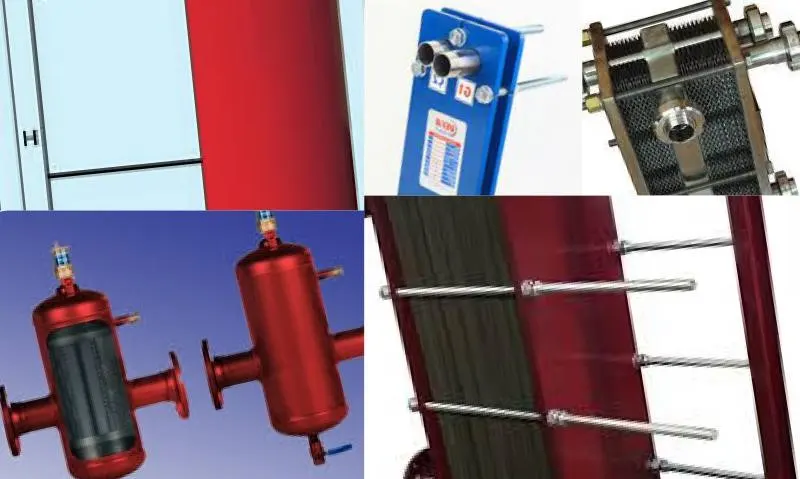
Types of Brazed Heat Exchangers
Brazed heat exchangers, a type of heat exchanger, are used when it is absolutely undesirable for fluids to come into contact with each other. In industrial applications, brazed heat exchangers are used as evaporators and condensers in cooling units, as well as instantaneous heaters in heating systems. Brazed heat exchangers are also preferred in applications involving very high temperatures. For detailed information, you can review the page https://www.vefaheat.com/esanjorler/lehimliesanjor/. Another reason for using these types of brazed heat exchangers is that leak-proof performance is absolutely crucial.
Structure of Brazed Heat Exchangers
The structure of a brazed heat exchanger, which can be designed with different plates offering various heat transfer characteristics, is durable. They are important structures used in processes where the primary goal is leak-proof performance. The plates in the structure of a brazed heat exchanger are brazed to each other. They also have very few moving parts. Let's look at the types of brazed plates:
- • H-Type Plate: These have wide-angle channels, and when heat transfer occurs, the fluid flows within the channels in a turbulent manner.
- • L-Type Plate: These have narrow-angle channels. The pressure loss during heat transfer is minimal. They are used only in heat transfer processes where pressure loss is unacceptable.
- • M-Type Plate: These are used when the temperature difference between the two fluids is very high. It is a combination of L-type and H-type plates.
The structure of a brazed heat exchanger is also important. Brazed heat exchangers are manufactured from high-quality components. Depending on the type of plate to be used, brazed heat exchangers allow for low pressure loss, high-efficiency heat transfer, or heat transfer over a wide range. Since these types of exchangers have very few moving connections, they are not only resistant to corrosion and pressure but also more resistant to temperature. Their compact design makes them important in terms of space. Additionally, due to their internal design, they provide high-efficiency heat transfer while reducing sediment buildup. The frequency of maintenance for brazed heat exchangers is low, which leads to lower maintenance costs.





