Label Details on Sacks
Big bag sacks, which enable heavy loads to be carried easily in daily life, are produced with specific standard dimensions. Made from 'pp' fabric ranging from 180 grams to 300 grams per square meter, lamination can be applied to the inner part if necessary, depending on the contents, to prevent fluid materials from leaking out. Simultaneously, a watertight seam is applied during stitching on the edges to prevent material from escaping or leaking. Generally, sacks are manufactured with 4 lifting loops. The filling opening at the top is designed in a funnel shape. The bottom discharge spout must also be funnel-shaped. Otherwise, the emptying process may not be carried out as desired. The discharge spout is expected to vary between 25-50 cm to allow for easy emptying of the material placed inside. Big bag sacks, which can be used in all areas, also come in different
big bag sack prices and models depending on their usage. However, it is mandatory for each of these sacks to have a label detailing its production. The labels must at least include information such as the manufacturer's name, safe carrying load, safety factor, the standards it has been tested against, the test certificate number, the name of the certifying organization, and the production dates of the sacks.
Big Bag Sack Models and Sectors of Use
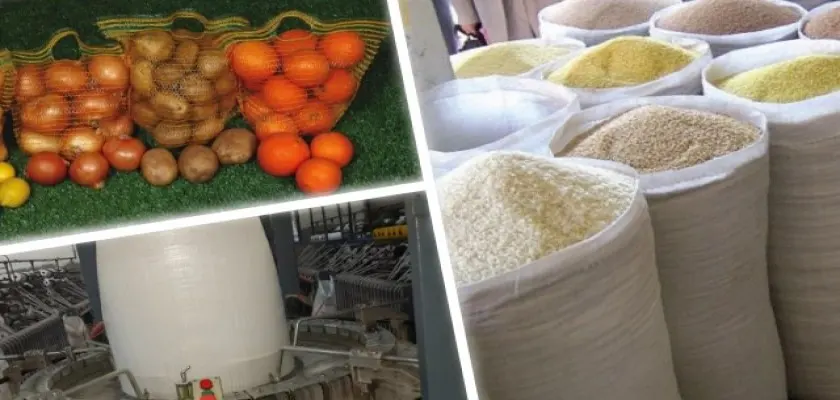
Sacks with model varieties such as cross corner, conductive big bag, vented big bag, standard big bag, and Q bag are rapidly becoming popular due to their low cost and high usability, and are preferred in many sectors. These sectors include food, agriculture, building and construction materials, industrial areas, chemicals, transportation, soil products, agricultural products, waste, petroleum by-products, mining, pharmaceuticals, and many more. Big bag sacks, also known as large bags, are very helpful for packaging, packing, transporting, and storing products, providing convenience to many customers. These sacks are a very useful and profitable option due to their low production cost and minimal material usage. These sacks are produced with moisture-resistant features and are equipped with single or multiple lifting loops.