Roller Conveyor Types and Their Applications
Conveyor manufacturing is done by professional companies in this field in large factories. Companies meet the demands of businesses in this area by producing in different sizes and designs. The elements, which require expertise from design to manufacturing, are produced from aluminum metal. They are installed in the places needed by the companies by the technical staff of the companies. These are practical structures that are used in every area of life, from the glass, textile, chemical, iron and steel sectors to tables, panels, and kitchen cabinets, and that make life easier. Conveyors are highly preferred not only for the convenience they provide but also for their affordable cost. These systems are especially needed in large enterprises to perform tasks such as transportation, accumulation, and storage in a shorter time. They transport from roller to roller thanks to thick chains and operate extremely quietly. They have a load-carrying capacity from 10kg to 500kg. Roller conveyors are produced in three types. Driven, non-driven, and reversible conveyors are preferred according to different needs.
Sigma Profile Dimensions
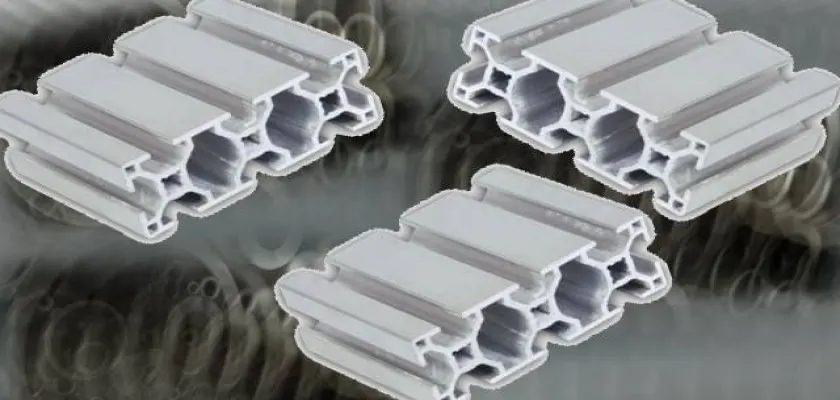
Driven conveyors are preferred for controlled transport, non-driven conveyors are preferred where transport control is not very important, and reversible conveyors are preferred in businesses where continuous and non-transfer transport will be carried out. Conveyor machines are made up of spare parts, which are called sigma profiles. While providing great convenience in businesses and all areas of life, they increase work efficiency. Sigma profiles are prepared in dimensions that may be needed in different spaces. Profiles prepared with measurements such as 20*20, 30*30, 45*45, and more, ensure standard compatibility with conveyor structures. That is, if a spare part needs to be replaced after the entire system is installed, spare parts designed for this purpose can be used. Dimensions and design are adjusted according to the weight capacity of the job. Different designs are needed for light loads and heavy loads. Today, different models are needed in all kinds of businesses. While models produced as display stands or load-carrying trolleys are needed in supermarkets, conveyor belts are needed in malls and airports. Spare parts are made of plastic or aluminum material and are compatible with many designs. Stainless steel is also among the metals used in this field.