
General Culture Experiments And Their Results
General Culture
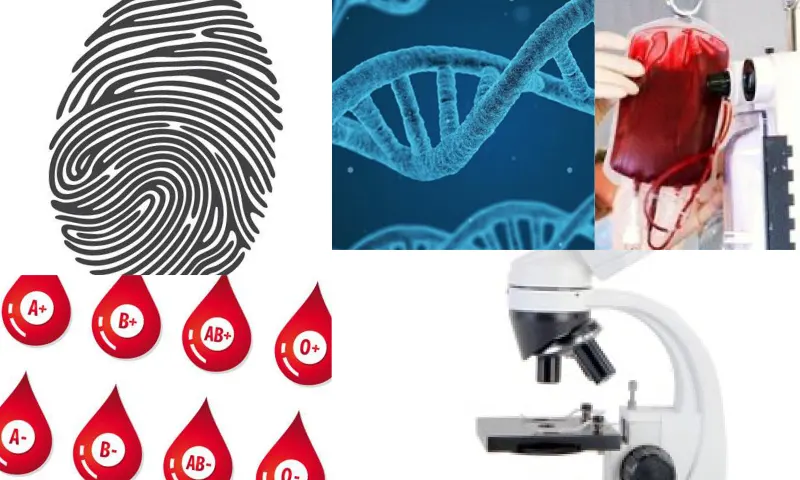
Inventions, experiments, and geniuses that changed our lives for humanity; some inventions and experiments were developed and concluded through research and study, while others were developed and concluded by chance. The most prominent among these are: the Microscope, the Cell, DNA, Fingerprints, Blood Groups, and Blood Transfusion.
Microscope
The inventor of the Microscope, which is the basis of many inventions, is the Dutchman Zacharias Janssen. He was an eyeglass maker and also worked on telescopes. It is known that he created the microscope by making modifications to the telescope he was working on in (1590). Although it is a subject of debate, he is credited with inventing the first compound microscope.
Cell
The invention of the microscope brought a different perspective to many discoveries. One of these is the cell, known as the building block of life. The cell was researched and experimented upon and discovered by the English astronomer Robert Hooke in the mid-17th century (1665). Hooke was unaware of the cell's structure or function. For about 200 years, no scientist understood the importance of the cell. However, it was examined and interpreted by Matthias Jakob Schleiden and Theodor Schwann in (1839), yielding results.
DNA; was discovered towards the end of the 19th century by the Swiss biologist Johennes Friedrick Miescher. In (1953), researchers named Watson and Crick gave meaning to the structure of DNA by conducting experiments on the models they prepared.
Fingerprints: Their use was first considered in (1858) by William Herschel, an Indian statesman. To prevent a contractor from backing out of a contract, he would have the contractor press their hands onto paper with ink under the agreement. At that time, he was unaware that fingerprints were a revolutionary discovery. Over time, realizing the significance of his discovery, he conducted detailed experiments. In (1892), for the first time, it received approval for identification purposes and was systematically put into practice.
Blood Groups and Blood Transfusion: The use of blood transfusion began in the 17th century. However, due to the lack of knowledge about blood group incompatibility, it resulted in many deaths. Karl Landsteiner, an immunologist and pathologist born in Vienna, who wanted to understand the cause of these deaths, discovered in (1901) through his experiments that the types of antigens in the blood were different. He grouped these differences as A, B, and 0. One year later, he discovered the AB group. After many tests, correct blood transfusions began to be performed without issues.





